
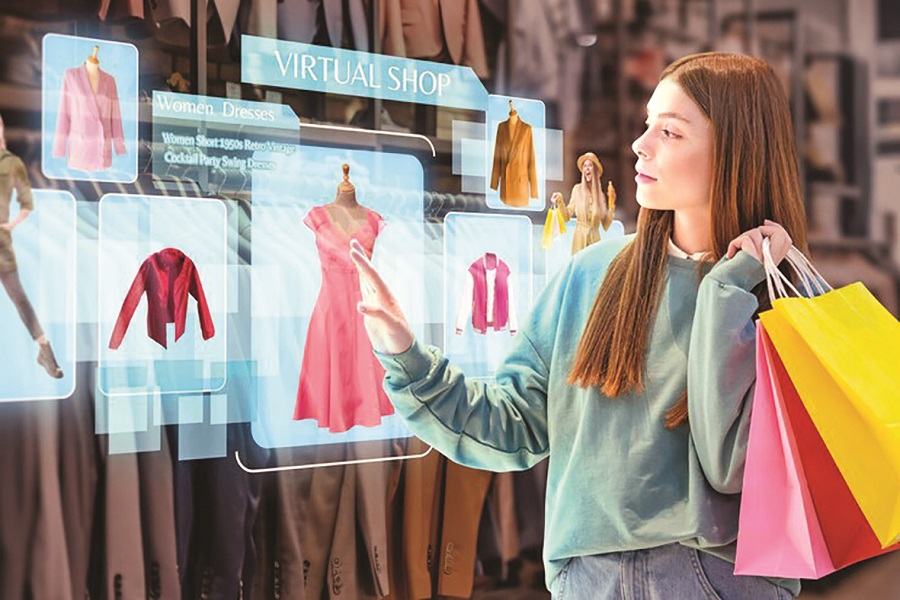

Online shopping once felt like flipping through an endless digital mail-order catalog. Consumers typed exact keywords into rigid search bars, scrolled through static grids of unrelated items, and crossed their fingers that garment sizes or sofa dimensions would match reality. Customer support meant navigating confusing phone menus or waiting days for a generic email response.
Artificial intelligence has dismantled that sluggish model. What started as basic recommendation carousels has grown into an intelligent digital ecosystem that anticipates intent, tailors digital storefronts in real time, and bridges the physical and virtual retail worlds. Today, machine learning models, computer vision systems, and generative language engines are turning ecommerce into an intuitive, interactive, and highly personal journey.
From Keyword Matching to Conversational Discovery
Traditional ecommerce search engines operated on strict keyword matching. If a shopper misspelled an item, used everyday conversational phrasing, or described an aesthetic concept rather than a formal product category, the search bar returned zero results.
Modern retail platforms utilize natural language processing and semantic understanding to read context, tone, and underlying human intent.
-
Contextual intent mapping: Shoppers no longer need to translate their thoughts into technical catalog terminology. A prompt such as breathable outfits for a summer garden party in hot humidity produces curated collections across dresses, footwear, and sun hats, even if none of those specific items contain those exact words in their product titles.
-
Autonomous conversational assistants: Static rule-based chatbots with canned decision trees have given way to dynamic conversational agents. Powered by large language models, these assistants recall previous shopping habits, answer complex questions about fabric care, cross-reference sizing charts against customer reviews, and guide users from discovery straight to checkout.
-
Review synthesis: Instead of forcing buyers to read hundreds of conflicting user reviews, natural language models summarize consensus feedback into concise overviews. Shoppers can instantly see whether a coat runs large, how soft a sheet set feels after washing, or whether a gadget holds up under daily use.
Hyper-Personalization and Real-Time Storefronts
Every consumer experiences an entirely unique digital storefront today. AI algorithms track multi-variable data streams, such as real-time browsing behavior, scrolling speed, previous order intervals, geographical weather patterns, and cart modifications.
Early recommendation systems merely showed what other customers bought in aggregate. Modern hyper-personalization engines predict what an individual customer wants next, often before the customer consciously searches for it.
-
Dynamic product ranking: Two shoppers searching for running shoes on the same platform see different result orders. An avid marathoner with an affinity for neutral-cushion road shoes will see lightweight trainers, while a casual weekend walker sees cushioned trail walking sneakers.
-
Affinity profiling across categories: Algorithms track specific design preferences across color palettes, silhouette structures, price thresholds, and ethical certifications. A user who consistently purchases sustainable, organic cotton basics will automatically see eco-certified alternatives featured prominently across all categories.
-
Predictive reorder automation: Machine learning models track the usage life cycle of household consumables, skincare items, or pet supplies. Instead of intrusive pop-ups, platforms schedule discreet reminders or apply automatic cart staging precisely when a customer is about to run out of an item.
Computer Vision and Immersive Visual Search
Text is often inadequate for describing visual aesthetics. A shopper might see an eye-catching mid-century armchair in an independent cafe or fall in love with a patterned jacket worn by a stranger on the subway.
Computer vision technology turns mobile cameras into powerful search engines. Shoppers simply snap an image or upload a screenshot, and neural networks identify individual garments, analyze textile patterns, trace design silhouettes, and return identical or visually comparable alternatives across multiple price tiers.
Visual search integrates directly with augmented reality to eliminate buyer hesitation:
-
Virtual try-on mirrors: Using computer vision and 3D facial mapping, beauty and eyewear retailers allow shoppers to test cosmetic palettes and frame shapes across their faces in real time under natural lighting simulations.
-
Spatial interior rendering: Home decor and furniture apps place scaled, three-dimensional models of sectionals, dining tables, and lighting directly into a customer’s living room via their smartphone screen. The software accounts for room dimensions, ceiling height, and shadows, allowing buyers to verify fit before committing to freight delivery.
-
Body-scanning fit engines: In fashion, inaccurate sizing is the leading driver of costly returns. New sizing technologies process quick smartphone camera scans to calculate precise body dimensions, comparing those measurements against production patterns to suggest the exact size a shopper requires across distinct apparel brands.
Dynamic Pricing and Algorithmic Bargain Finding
Pricing in modern ecommerce is fluid, transparent, and reactive. Dynamic pricing algorithms analyze millions of data points every hour, factoring in real-time supply inventory, competitor promotions, regional demand spikes, and shipping logistics costs.
This optimization benefits retailers by safeguarding profit margins, but it also benefits the consumer. AI-driven browser extensions and integrated digital wallets scan historical price fluctuations, predict whether an item will drop in price over the coming week, and automatically apply validated promotional coupon codes during checkout. Shoppers spend less time hunting for discounts across external deal forums because automated engines verify the best market price directly on the page.
Intelligent Behind-the-Scenes Logistics and Fraud Protection
While customer-facing innovations capture attention, the most substantial improvements happen deep within operational supply chains. When an order is placed, artificial intelligence coordinates its fulfillment to ensure rapid, reliable delivery.
-
Predictive demand placement: Machine learning engines analyze localized purchasing trends and regional weather forecasts to distribute inventory across regional micro-fulfillment centers before orders are placed. This shortens transit distances and enables same-day or next-day delivery.
-
Automated warehouse coordination: Robotic sorting systems in fulfillment hubs rely on computer vision to pick, pack, and sort packages efficiently, minimizing packing errors and reducing shipping damage.
-
Real-time fraud defense: High-speed anomaly detection tools monitor purchase behavior, device fingerprints, and payment channels. They block credit card theft and account takeovers instantly while ensuring legitimate customers do not suffer frustrating false transaction declines.
Artificial intelligence has turned online commerce from a static directory into an intelligent, responsive personal shopping concierge. By simplifying discovery, tailoring the catalog to individual preferences, and streamlining logistics, AI removes the friction of shopping online, giving buyers more time to enjoy what they buy.
Frequently Asked Questions
Does artificial intelligence compromise the privacy of online shoppers?
AI systems rely on behavioral data to personalize storefronts, which makes data privacy a valid consideration. Reputable retailers anonymize personal customer details and use aggregated or tokenized data pools to train their algorithms rather than storing unprotected personal identities. Consumers can manage their privacy footprint by adjusting site cookies, shopping through privacy-focused browsers, and managing marketing consent settings in their retail account profiles.
Will AI shopping assistants completely replace human customer service agents?
No. While AI shopping assistants handle high-volume, routine inquiries like order tracking, return processing, and basic product questions, complex issues still require human insight. In situations involving damaged custom goods, unusual shipping disputes, or delicate customer escalations, AI systems serve as triage tools that organize relevant transaction data before passing the customer to a skilled human support representative.
Why do product prices fluctuate so frequently when shopping online?
Retailers use dynamic pricing models that respond automatically to supply and demand changes. If warehouse stock runs low or a sudden viral social trend causes an item to surge in popularity, automated pricing engines adjust prices upward to regulate inventory. Conversely, if a competitor drops their price or inventory sits idle past expected holding periods, algorithmic discounts trigger automatically to move the product.
How does AI reduce the environmental footprint of online retail?
E-commerce produces significant carbon emissions through return shipping and oversized packaging. AI combats this by providing accurate sizing and spatial previews, which cuts down return rates. Furthermore, AI optimization tools calculate the exact box dimensions needed for multi-item orders to eliminate packing waste, while route-optimization software maps fuel-efficient delivery paths for courier fleets.
Can AI generate fake customer reviews on shopping websites?
Generative language tools can be exploited by bad actors to produce fake reviews at scale. However, major ecommerce platforms counter this by deploying specialized fraud-detection models designed to identify synthetic linguistic patterns, unnatural review timing clusters, and suspicious account creation spikes. These systems proactively scrub fraudulent ratings before they influence consumer purchasing decisions.
How do visual search engines tell the difference between similar products?
Computer vision systems break down images into vector embeddings that represent specific visual features: edge angles, surface color variations, fabric draping, stitching details, and silhouette contours. The system compares these numerical representations against millions of indexed product photographs to pinpoint identical items or rank closest visual matches with high accuracy.
Is virtual try-on accurate enough to rely on for fine jewelry or tailored garments?
Virtual try-on accuracy has progressed rapidly thanks to real-time depth-sensing sensors and 3D modeling. For structured objects like sunglasses, earrings, rings, and watches, the virtual fit closely replicates real life. For unstructured garments like loose silk blouses or tailored wool jackets, accuracy depends on the retailer using true physics-based cloth simulation alongside precise user measurements, which is rapidly becoming standard practice across leading fashion brands.
Comments are closed.