
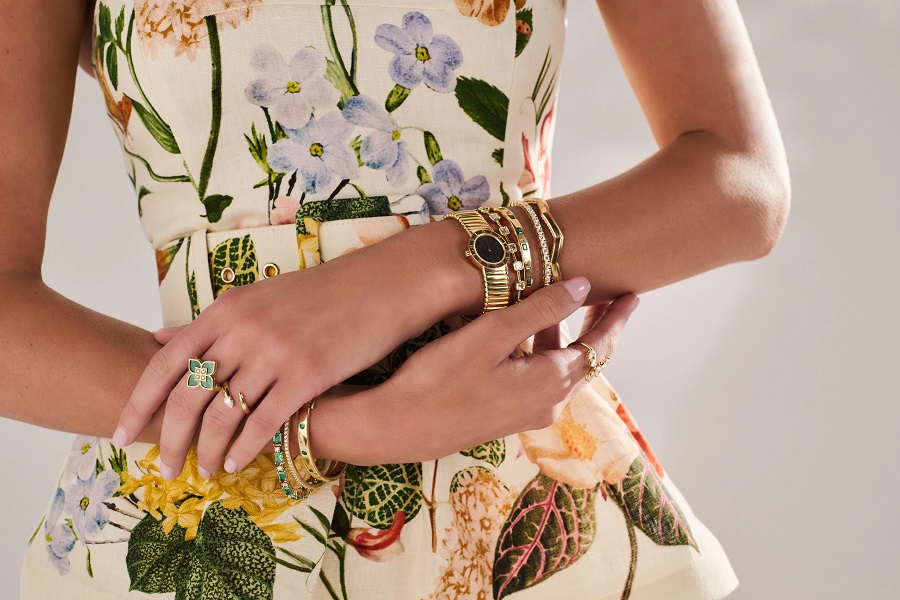

Every season brings a fresh wave of micro-trends, flash sales, and mass-produced fashion accessories. Gold-plated base metals, synthetic resins, and whimsical statement pieces crowd shop windows, promising instant updates to an everyday look. Yet within months, these novelty designs lose their visual appeal, tarnish down to an unsightly copper core, or find themselves tossed into the back of a drawer once the trend cycle moves on.
Building a collection around timeless jewelry represents a radically different philosophy. It embraces enduring design, genuine craftsmanship, and precious materials that hold tangible worth over decades. Rather than burning capital on fleeting trends, choosing timeless jewelry allows you to construct a personal collection that elevates your daily presence, holds real intrinsic value, and remains effortlessly relevant across a lifetime.
The Real Cost of Fast Fashion Jewelry
The primary temptation of costume jewelry is affordability. A low price point provides immediate gratification without requiring upfront deliberation. However, evaluating costume pieces through a practical cost-per-wear lens reveals significant hidden expenses.
Inexpensive accessories typically rely on cheap base metals, like brass, nickel, or zinc alloys, finished with an ultra-thin layer of electroplated gold or silver. This thin barrier rubs away under the friction of everyday skin contact, moisture, and ambient air. Within weeks or months, the piece begins to discolor, flake, and turn green against the skin.
-
Skin sensitivities and allergic reactions: Nickel and other trace metals in fast fashion jewelry frequently cause contact dermatitis, redness, and itching, rendering items unwearable after short intervals.
-
The endless replacement loop: Because low-cost accessories degrade so rapidly, buyers end up repurchasing similar items repeatedly over several years.
-
Environmental accumulation: Mass-manufactured costume jewelry is non-recyclable, non-repairable, and rapidly discarded, filling landfills with toxic metallic sludge and non-biodegradable synthetic stones.
Investing in noble metals, such as solid yellow gold, white gold, rose gold, platinum, and sterling silver, breaks this cycle. These metals do not degrade with surface abrasion. They can be polished, reshaped, resized, and worn continuously across decades.
Retaining Tangible Intrinsic Value
Unlike clothing, shoes, electronic devices, and vehicles, fine jewelry crafted from precious metals and natural gemstones carries independent asset value. While you should never view personal jewelry purely as a speculative financial instrument, high-caliber pieces retain real baseline worth in secondary markets.
The value of costume jewelry evaporates the second you walk out of the store. By contrast, a solid fourteen-karat gold chain or platinum solitaire retains fundamental value tied directly to global commodities markets.
-
Precious metal content: Gold, platinum, and silver are scarce natural commodities that have served as reliable stores of wealth for millennia. A broken solid gold bangle can still be melted down, refined, and recast without losing any of its elemental material value.
-
Natural stone durability: Fine stones, such as natural diamonds, sapphires, rubies, and emeralds, rank high on the Mohs hardness scale. They resist scratches, surface abrasions, and fractures, maintaining their clarity and luster across multiple generations.
-
Resale liquidity: Established heritage designs, whether signed vintage pieces or unbranded classic chains, possess an active global resale market. Should circumstances require liquidation, reputable jewelers and private buyers consistently purchase fine metals based on weight and stone grading.
Effortless Versatility Across Decades and Occasions
The hallmark of a timeless piece is its refusal to conform strictly to one single occasion or era. It functions seamlessly across dress codes, transitions naturally from sunrise to late evening, and feels right whether paired with a simple cotton t-shirt or formal eveningwear.
Trend-driven statement pieces often dictate what you can wear around them. A bold, hyper-colored acrylic collar necklace demands a specific neckline, an uncluttered backdrop, and a deliberate mood. Timeless staples, by contrast, complement the wearer rather than competing for attention.
Key foundational staples that provide unmatched versatility include:
-
Diamond or moissanite stud earrings: Clean, low-profile studs sit comfortably on the lobe, providing subtle light that balances facial features without distracting from business attire or casual wear.
-
A solid gold chain: Whether a classic curb, cable, Figaro, or Franco link, a substantial solid gold chain works as an understated everyday solo piece or as an anchor for layering.
-
Tennis bracelets: A flexible, continuous row of bezel-set or prong-set stones creates fluid movement on the wrist, balancing formal glamour with everyday sports-luxe aesthetics.
-
Signet rings and plain bands: Understated gold or platinum bands carry quiet confidence, offering everyday tactile comfort without snagging on knits or hair.
-
Classic hoop earrings: A pair of medium, thick-gauge solid gold hoops frames the jawline gracefully and complements any hairstyle, from an updo to loose waves.
Because these silhouettes have stood the test of aesthetic scrutiny for over a century, you will never look back at personal photographs twenty years later and cringe at your jewelry choices.
True Craftsmanship and Repairability
When you buy cheap costume accessories, you buy an item designed to be discarded once damaged. The thin metals cannot take heat, prong settings break under gentle pressure, and lost stones cannot be replaced cost-effectively.
Fine jewelry relies on centuries-old bench techniques that prioritize maintenance, structural integrity, and longevity.
-
Torch and laser work: Skilled bench jewelers can easily solder cracked bands, rebuild worn prongs, re-tip stone settings, and lengthen or shorten chains without damaging the surrounding piece.
-
Surface refinishing: Scratches on solid gold or platinum are simple to manage. A bench jeweler can lightly buff the surface to return it to a mirror finish, or run a brush over it for a soft matte texture.
-
Stone resetting: If an heirloom setting ever feels outdated, the gemstones can be unmounted and set into an entirely fresh, modern silhouette while preserving the original stones and recycling the metal.
This repairability provides genuine peace of mind. Fine jewelry is made to live out in the real world, surviving showers, hand washes, workouts, and sleep without sudden failure.
Emotional Resonance and Generational Heirlooms
Material possessions rarely carry deep emotional significance unless they accompany us through important life moments. Fine jewelry serves as an intimate timeline of personal milestones, transitions, and achievements.
A luxury watch purchased to celebrate a career milestone, a pair of diamond studs gifted for a wedding anniversary, or a signet ring worn daily through college and early adulthood becomes infused with memories. Because these pieces remain structurally sound, they naturally transition into family heirlooms.
Passing down a pristine piece of fine jewelry creates an unbroken physical connection across generations. An heirloom necklace carries the warmth, scent, and memory of the person who wore it every day. Cheap fashion jewelry simply cannot survive long enough to fulfill this role.
Choosing timeless jewelry is a vote for intentionality. It shifts your mindset away from the relentless churn of disposable consumption toward an appreciation for quality, permanence, and enduring elegance.
Frequently Asked Questions
What metal purity is best for everyday fine jewelry that will not bend or scratch too easily?
Fourteen-karat solid gold is generally considered the optimal sweet spot for daily wear in the United States. While eighteen-karat and twenty-four-karat gold offer richer, deeper yellow hues, pure gold is relatively soft and prone to dings and scratches. Fourteen-karat gold contains fifty-eight point three percent pure gold alloyed with stronger metals like copper, silver, and zinc, providing exceptional structural durability alongside rich luster.
How should someone with a limited budget begin investing in fine jewelry?
Start with one foundational piece that you know you will wear daily, rather than buying several smaller, mediocre pieces. A versatile pair of small solid gold hoops or a classic chain necklace in sterling silver or hollow fourteen-karat gold provides excellent starting points. Look to local estate jewelers or reputable vintage dealers to acquire authentic pieces at significant discounts compared to traditional retail markups.
What is the difference between gold vermeil, gold-filled, and solid gold?
Solid gold is consistent throughout the entire piece and never wears down to an underlying base metal. Gold-filled items feature a thick, mechanically bonded layer of solid gold over brass or jeweler bronze, offering substantially more durability and tarnish resistance than plating. Gold vermeil consists of a specific thickness of electroplated gold over a pure sterling silver base. Vermeil is superior to cheap costume plating, but it will eventually need re-plating over years of constant friction.
Do lab-grown gemstones hold the same long-term investment value as natural stones?
Lab-grown diamonds and gemstones share the identical chemical, optical, and physical properties of natural stones, meaning they offer the same exceptional hardness, brilliance, and everyday durability. However, because lab-grown stones are manufactured in industrial facilities where production volume scales up continuously, their resale value in the secondary market drops much faster than that of scarce natural stones.
How do you properly clean and maintain fine jewelry at home without damaging it?
For the vast majority of solid gold, platinum, diamond, and sapphire pieces, soak them in a small bowl of warm water mixed with a few drops of gentle, fragrance-free liquid dish soap for fifteen minutes. Use an extra-soft baby toothbrush to dislodge oils and lotion from behind the prongs and settings, rinse thoroughly under running lukewarm water with the drain securely covered, and pat dry using a clean microfiber cloth. Never use harsh chemicals, bleach, or boiling water.
Why does platinum cost more than gold if their market spot prices are sometimes similar?
Platinum is significantly denser and heavier than gold, meaning the identical ring will weigh roughly thirty to fifty percent more when cast in platinum than in fourteen-karat gold. Platinum is also sold at ninety-five percent purity compared to the fifty-eight point three percent purity of fourteen-karat gold. Furthermore, platinum requires specialized tooling, higher melting temperatures, and greater bench jeweler expertise to cast and polish, which increases manufacturing labor costs.
Which classic gemstones are too soft for continuous, everyday ring wear?
Opals, pearls, turquoise, tanzanite, and moonstones are relatively soft and porous materials that sit low on the Mohs hardness scale. They are susceptible to chipping, scratching, chemical damage, and dehydration from hot water, hand sanitizers, and household cleaners. While they make stunning occasional pieces or pendants, they require intense caution if chosen for daily wear rings. Diamonds, sapphires, rubies, and chrysoberyls are far better suited for continuous, heavy ring usage.
Comments are closed.